Definition and Purpose of Aprenin
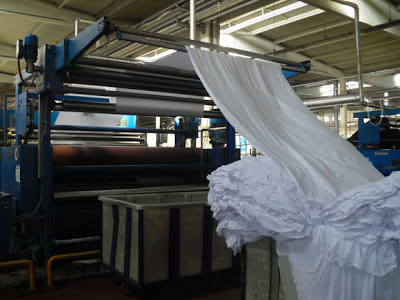
After the pre-treatment and dyeing processes of textile materials, all mechanical and chemical processes performed before leaving the finishing plant are called finishing processes or finishing treatments. The purpose of finishing treatments performed on textile products after dyeing is to change and improve the product's appearance and properties. The people and companies that perform these processes are also called finishers. Not all finishing processes applied chemically and mechanically are applied to every product. Certain criteria are taken into account when performing finishing processes. These include the product's form, the type of fiber, the intended use, the degree of durability, and the thickness and fineness of the product. For example, static electricity, which is seen in synthetic fibers, does not occur in natural fibers. Therefore, finishing that prevents static electricity can only be applied to products made from synthetic-based fibers. The type of fiber is taken into account when performing finishing by chemical and mechanical means. While some finishing processes can be applied to all types of fibers, others cannot be applied to all fiber types.
Chemical Finishing Processes Applied to All Fibers
The transfer of the finishing agent to the textile product by passing it through a flotation tank or treating it for a period of time is called chemical finishing. The finishing agent is dissolved in a liquid and then transferred to the material using a finishing machine that operates by impregnation or extraction methods. Due to the rapid transfer of finishing agents to the textile material, chemical finishes are applied to fabric products in the finishing frame. This is because it is a continuous system and is fast. Apart from this, chemical finishing is also possible on machines such as overflow, airflow, and haspel, which operate using the drawing method.
It is a chemical finishing process performed to give the product a soft feel. Since the processes the product undergoes after dyeing result in a stiff texture, a softening process is performed. Softening finishing is a finishing process applied regardless of the product form after dyeing, the type of fiber, or the area of use.
Appreciation for a Firm Stance
It is a chemical finishing process that imparts a stiff hand to textile materials and can be applied to all fiber groups. Although it is a finishing process applied to all fibers, its application area is limited because a stiff texture is an undesirable characteristic in fabrics. However, a stiff texture finish is applied to products such as tarpaulins, canopies, and tarlatan used in wedding dresses, i.e., products that need to be stiff and firm.
Kayganlık apresi tüm liflere uygulanan bir kimyasal apre işlemidir. Materyale uygulandığında kaygan bir hâl ve daha yumuşak bir tutum kazanır. İpek hissi veren kayganlık apresi, apre maddesinin materyale aktarılmasıyla gerçekleştirilir.
İnce yapılı kumaşlara uygulanan kimyasal bir bitim işlemidir. Dokuma kumaşlarda atkı ve çözgü ipliklerinin yüzeyleri, örgü kumaşlarda da ilmeklerin yüzeyleri, dolgunluk maddesiyle kaplanarak kumaş daha dolgun bir tutum kazanır. Kumaşın tutumunda hissedilir oranda dolgunluk meydana gelirken bir miktar da gramajında artma meydana gelir.
Mekanik yöntemlerle uygulanabildiği gibi kimyasal yöntemlerle de uygulanabilen bir apre işlemidir. Materyale uygulandığında apre maddesinin etkisiyle kumaş daha parlak bir görünüm kazanır. Genellikle dış giyim ürünlerine uygulanmaktadır.
Kuru veya yaş kirin kumaşa tutunmasını ve içine işlemesini engelleyen ya da azaltan bitim işlemidir. Kir itici apreyle kumaş yüzeyinde ince film şeklinde bir tabaka oluşturulur. Kir, kumaşın yüzeyinde bulunan film şeklindeki tabakaya takılır ve kumaşın içine işlemesi engellenir. Uygulama sonrası kumaş sert bir tutum kazandığından uygulama alanı sınırlıdır. Genellikle koltuk döşemeleri, halı gibi çabuk kirlenen ve sık temizlenmeyen ürünlere uygulanır.
 |
| Water-Repellent Finish, Widely Used Especially in Outerwear Textile Products |
In the water-repellent finishing process, a hydrophobic (water-repellent) surface is created around the fibers. Since the fabric's pores are not closed, air transfer occurs. When water is poured onto the surface of a water-repellent finished fabric, the water remains on the fabric surface in the form of droplets. In addition to water repellency, this treatment also imparts stain resistance to the fabric. Water-repellent finishing is applied to fabrics intended for winter outerwear (raincoats, etc.).
The front and back surfaces of the fabric are coated with a thin film layer of waterproof finishing agent. Since the fabric's pores are largely closed, breathability is very difficult. Therefore, it is a finishing method that can only be applied in limited areas. It is generally applied to tents, tarpaulins, and the fabric parts of shoes.
Grip Strength Appreciation
Flame retardancy finishing is referred to as flame retardant finishing in some sources. Flame retardant finishing is achieved by transferring the finishing agent to the fabric surface. It is generally applied to bedding, military and firefighter clothing, vehicle upholstery, and textile products used in public and private areas open to the public (theater curtains, etc.).